From Regional Flavours to Interactive Food Stations: Planning a Wedding Menu Guests Remember
A memorable Indian wedding menu combines regional dishes the families genuinely love with a few well-placed live food stations. It is planned around the mood of each function, every guest’s dietary needs, and a service team that can deliver at scale. Taste matters, but so do pacing, presentation and the ease with which a guest can reach the food.
Ask anyone about a wedding they attended years ago and the food often comes up before the décor. It might be the chaat counter with a queue of uncles, the jalebi served hot at midnight, or the dosa chef who remembered everyone’s preferences. At Reetireevaj, the wedding planners in Mumbai and Jaipur behind this blog, we see menu planning as part of the guest experience, not a separate task. This guide covers how couples can plan one that works.
How Do You Bring Regional Flavours into an Indian Wedding Menu?
Choose cuisines that reflect both families’ roots and the guests’ tastes, then give each one a clear place in the menu rather than blending everything into one buffet. Regional Indian cuisine for weddings works best when each dish is served the way it is meant to be eaten.
Start with the two families
Begin with what is non-negotiable for each side. A Gujarati family may want a proper thali-style spread, while a Maharashtrian family may ask for puran poli and masale bhaat. A Bengali or Rajasthani relative may be waiting for one particular dish. Ask each family for three or four dishes that mean “wedding” to them. This gives the caterer a starting point and shows both sides that their traditions are respected.
Cuisines worth considering
- North Indian and Punjabi: tandoori grills, slow-cooked dals, rich gravies and fresh breads.
- South Indian: crisp dosas, appams with stew, filter coffee and banana-leaf-style serving.
- Gujarati: farsan, undhiyu in season, kadhi and shrikhand.
- Maharashtrian: vada pav and misal bites for cocktail hours, and a traditional festive plate for lunch.
- Rajasthani: dal baati churma, gatte ki sabzi and laal maas for non-vegetarian menus.
- Bengali: mishti doi, sandesh and, for non-vegetarian menus, fish preparations.
Balance authenticity with variety
Not every cuisine needs a full counter. Pick two or three regional anchors, then add a smaller contemporary or global element for guests who like variety. A tight, confident menu feels more luxurious than one that tries to serve everything.
Indian Wedding Menu Ideas for Different Wedding Functions
Each function has its own pace, so the food should match it. Matching menu style to the mood of the day is also the simplest way to avoid repetition across a multi-day celebration.
Mehendi: relaxed and snackable
Guests sit for hours with hands outstretched, so finger food works best. Think chaat, kebabs, mini samosas, fresh juices, lassi and chai. Keep it light, easy to eat one-handed and served in small portions.
Haldi: bright and daytime-friendly
Haldi is usually a morning or early-afternoon event. A breakfast-style spread with poha, kachori, jalebi, fresh fruit and masala chai suits the mood. Avoid anything heavy or messy, since everyone is wearing yellow.
Sangeet: lively and social
This is the night for live counters, bars and plenty of movement. Serve small plates, strong starters and desserts people can pick up between performances. Food should never compete with the stage, so keep counters away from the dance floor and sightlines.
Wedding ceremony: traditional and unhurried
Many families prefer a sit-down or thali-style meal after the pheras, often with strict vegetarian or Jain requirements. Prioritise comfort and familiar flavours, and give elders priority seating and service.
Reception: formal and polished
Wedding reception menu planning is where couples can bring in a more contemporary look. A multi-course meal, plated desserts and a refined beverage programme work well. Keep a few regional dishes on the menu so it still feels rooted in the families.
Which Live Food Stations Work Best at Indian Weddings?
The most popular live food stations for weddings are chaat counters, dosa and uttapam stations, tandoor and grill counters, fresh Indian bread stations, dessert counters and interactive beverage bars. They work because guests watch the food being made, choose how they want it and talk to each other while they wait.
Chaat counters
Pani puri, sev puri, dahi puri and tikki chaat are reliable favourites. Put a chef at the counter to assemble each plate to order, and keep the crisp elements covered until the last moment.
Dosa and regional speciality counters
A dosa station is a crowd-pleaser with a short wait if you have enough tawas. The same logic applies to a Gujarati farsan counter, a Maharashtrian snack corner or a Rajasthani live baati counter.
Indian bread and tandoor stations
Fresh naan, kulcha, rumali roti and lachha paratha straight from the tandoor make the rest of the meal taste better. Pair them with two or three dishes rather than a full curry spread.
Dessert counters
Hot jalebi with rabri, live kulfi falooda, a paan station or fresh waffles with Indian toppings add a fun finish. A dessert counter near the exit also gives guests a reason to stay longer.
Interactive beverage stations
A cocktail bar, a mocktail counter, a masala chai station or a fresh juice corner gives guests somewhere to gather. For daytime events, a cold-pressed juice or sherbet bar feels more thoughtful than packaged drinks.
Reetireevaj’s catering selection service includes live experiences such as chaat counters and tandoori grills. We can match the number and type of stations to the function, guest count and venue.
How Do You Balance Luxury, Variety and Guest Preferences?
Offer variety through well-labelled choices rather than a longer menu. Group dishes clearly and plan for the dietary needs that are certain to appear. This is how luxury wedding catering stays elegant instead of overwhelming.
- Vegetarian and non-vegetarian: Keep them physically separate, with separate utensils and clear signage. In many families, one function may be fully vegetarian by custom.
- Jain requirements: Jain guests avoid root vegetables and often have specific preparation rules. A dedicated Jain counter with its own cooking arrangement is better than a “Jain option” in the main buffet.
- Vegan and gluten-free: Mark these dishes clearly. Many Indian dishes are naturally vegan or gluten-free, so this is usually about labelling and cross-contamination rather than reinventing the menu.
- Allergies: Ask for nut, dairy and shellfish allergies on the RSVP form, and brief the catering team and chefs before the event.
- Religious and cultural considerations: Some guests may avoid beef, pork, alcohol or certain ingredients on particular days. Ask early.
- Children: Add a small kids’ corner with familiar food such as pasta, mini pizzas, fries and plain rice dishes.
- International guests: Mild options, clear descriptions and a few familiar dishes help. Do not dilute the regional menu; just offer guidance.
A useful rule: for each cuisine on the menu, offer a vegetarian anchor, a lighter option and a dessert. Beyond that, extra choices usually add queues, not delight.
How Do You Plan a Cohesive Menu Across Multiple Wedding Functions?
Plan the whole wedding menu as one journey, then assign each function a distinct culinary theme, so no dish appears twice and each event feels different.
- Assign each function a theme. For example: mehendi is street food, haldi is a regional breakfast, sangeet is live counters, the wedding day is a traditional meal, and the reception is a contemporary multi-course dinner.
- Track every dish. Keep a single master list for the caterer and planner so repeats are caught early.
- Use seasonal ingredients. Mangoes in summer, gajar halwa and sarson ka saag in winter, and fresh produce when it is at its best make menus taste better and often cost less.
- Vary desserts and beverages. Guests remember the dessert table and the bar as much as the mains, so give each function a different dessert and drink identity.
- Blend traditional and contemporary. A classic dal baati churma followed by a deconstructed dessert, or a traditional chaat served in a modern format, keeps the menu rooted without feeling dated.
Menu tastings help here. Reetireevaj arranges tasting sessions with its catering partners so couples can finalise the menu with confidence, and the same approach applies across mehendi, sangeet, pheras and reception.
What Catering Logistics Should Couples Plan in Advance?
Wedding catering planning comes down to a handful of practical questions: how many guests, what the venue’s kitchen can handle, where counters will go, how guests will move, and how quickly food can be replenished.
- Guest count and flow: Confirm numbers per function, not just for the wedding as a whole. Plan roughly one live counter for every 75 to 100 guests, then adjust for the dishes.
- Venue facilities: Check kitchen access, power, water, gas rules, storage and any restrictions on live cooking, especially at hotels and heritage venues.
- Counter placement: Spread counters across the space so guests do not bunch up. Leave clear walkways and keep counters away from entrances and stage areas.
- Service staff: Count servers, chefs, runners and cleaners, not just cooks. Under-staffing is the quickest way to create long queues.
- Replenishment: Agree how quickly each dish is topped up and who signals the kitchen.
- Hygiene: Request food-safety practices, covered displays, separate preparation areas and clear handling of allergens.
- Timing: Work backwards from the programme. If the bride’s entry or the pheras run late, the kitchen needs to know.
- Weather: For outdoor weddings, plan shaded counters, covered service areas and a backup for rain or heat. This matters especially for destination and resort weddings, where destination and venue selection shapes what is possible.
This is where experienced event organisers in Mumbai earn their place. A planner who coordinates the caterer, venue, décor, entertainment and guest logistics in one timeline catches clashes before guests do. Reetireevaj’s hospitality and logistics team works with caterers and venues so the service runs smoothly across every function.
How Do You Coordinate Food Presentation with Wedding Décor?
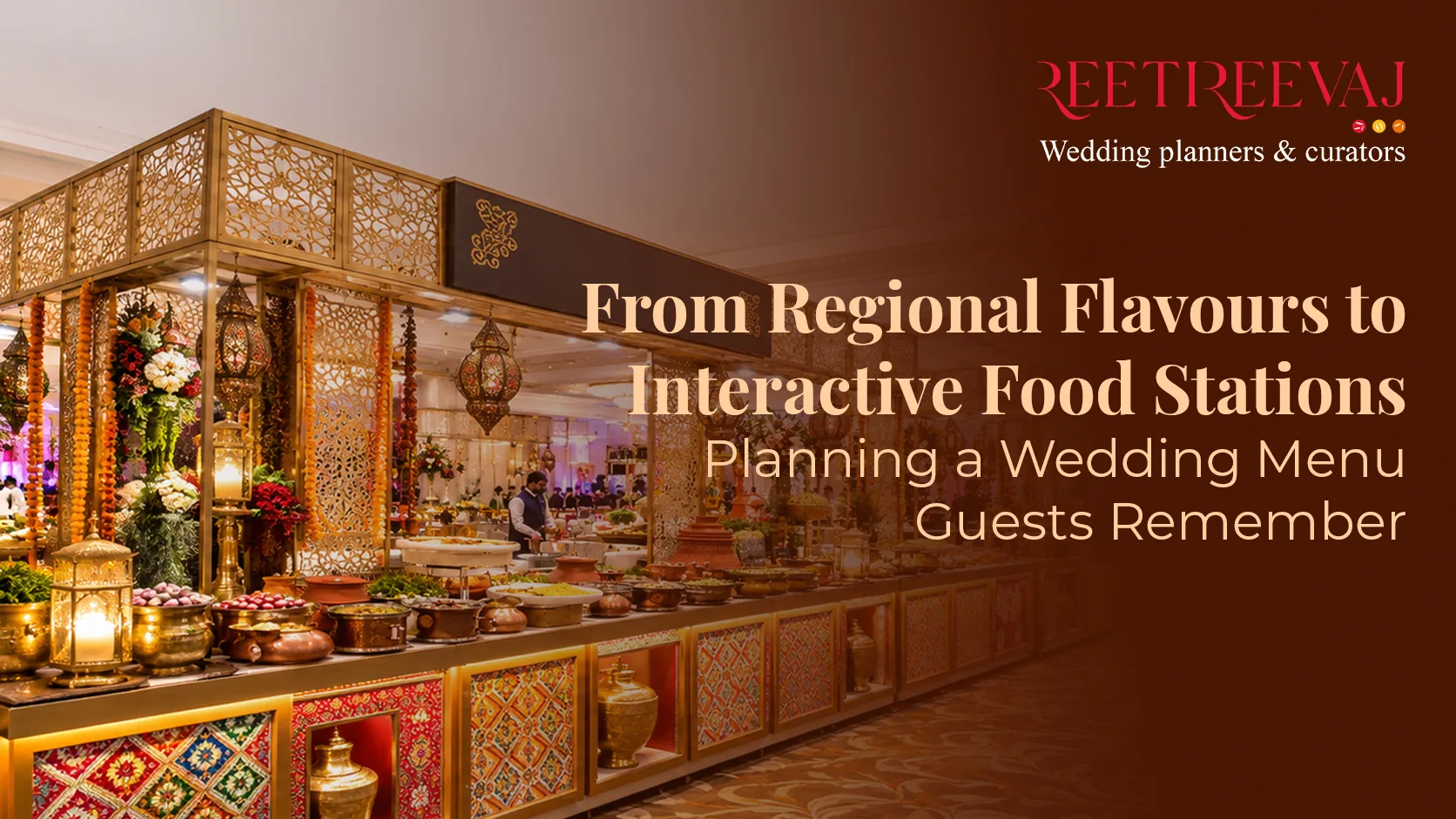
The best food presentation belongs to the overall design. Counters, signage, lighting and table styling should reflect the wedding’s theme, while keeping food accessible, hygienic and quick to serve.
- Counter design: A South Indian counter might use brass, banana leaves and cane. A Rajasthani one might use block prints and terracotta. These details tell guests where they are without a word.
- Signage: Keep it clear and elegant. Label dishes, dietary markers and allergens in a style that matches the wedding.
- Lighting: Good lighting makes food look better and helps chefs work safely. Avoid very dim or coloured light directly on food.
- Table styling: Choose crockery, glassware and linen that suit the function, but avoid anything that makes service slower or harder to clean.
- Practical limits: Do not let décor block access to counters, narrow walkways or crowd the chef’s workspace.
When you brief event decorators in Mumbai, share the menu and counter plan from the start. Ask for a counter layout drawing, not just a mood board, so the decorators and caterers agree on dimensions, power points and service routes. Reetireevaj’s production of décor and design service brings design and food layout into a single plan, and its entertainment and artists team can fit performances around meal timings.
How Do You Choose the Right Wedding Planning Team?
Look for a team that understands your guests, coordinates the caterer and venue, and manages the timeline from the first tasting to the final send-off. Food looks effortless only when a planner has done the work behind it.
When you start shortlisting from an event management companies in Mumbai list, ask practical questions. How do they brief caterers? Do they arrange tastings? Who is on the ground during the event? How do they handle a delayed ceremony or a sudden guest count change?
The best wedding planners in Mumbai tend to be the ones who ask about your guests and families before they talk about themes. They know the city’s venues, from South Mumbai’s heritage spaces to Bandra’s modern spaces and the five-star hotels, and they understand how each venue handles catering.
Many wedding companies in Mumbai offer catering coordination as part of a broader service, so it helps to see how that coordination works in practice. Ask for examples of multi-day menu plans, and look at portfolios and reviews to see how a team handles real events. Budget belongs in the conversation too, and our guide to wedding planner charges in India is a useful starting point. Reetireevaj’s end-to-end wedding planning covers venue, décor, catering, entertainment and guest logistics under one team, which keeps the dining experience connected to everything else.
Common Wedding Menu Planning Mistakes to Avoid
- Too much variety: A 15-dish menu per function leads to lukewarm food and long waits. Fewer, better dishes win.
- Repeating dishes across functions: Guests notice. Use a master menu to prevent it.
- Ignoring dietary needs: Jain, vegan, allergy and religious requirements need planning from the start, not a last-minute fix.
- Badly placed live counters: Counters near entrances, bars or dance floors create bottlenecks.
- Long queues: Too few counters or chefs for the guest count will frustrate people. Add stations rather than asking chefs to work faster.
- Inadequate staffing: Great food with too few servers still feels poor.
- Poor coordination: If the caterer, venue and décor teams do not share one plan, power, space and timing problems surface on the day.
Conclusion
A wedding menu guests remember is built from good decisions: regional dishes that mean something to both families, live stations that give guests a reason to gather, menus shaped to each function, dietary needs planned in advance, and a team that runs the logistics quietly. When these come together, the food becomes part of how the wedding feels.
If you are exploring luxury wedding planning in Mumbai and want the menu, décor and guest experience to work as one, explore Reetireevaj’s wedding planning services or browse our portfolio. Our FAQs cover common planning questions, and when you are ready to talk, get in touch with our team to start planning.